
Why Timber Mat Defects Matter More Than You Think
Why Should We Care? Common Mat Defects, Why They Matter, And What They Mean To You – was revised on January 19, 2026
Timber mat defects reduce strength because missing or damaged wood cannot carry load.
Voids, bark, wane, splits, and rot all increase risk for cranes, trucks, and crews.
When reliability matters, choose standardized mats with sound timbers and minimal defects.
Timber mat defects are not just cosmetic. When you put cranes, trucks, and people on a mat, you rely on solid wood to spread load into the ground and keep everyone safe.
The Core Problem: Mats Only Work When The Wood Works
Timber mats work because the timbers and bolts together accept the load and spread it across the mat area into the soil. The load spreading happens through the bolts. The bolts make separated timbers act as if they are one mat. If there is no sound wood where the load should go, the mat cannot do its job. If the wood around the bolts has defects including round wood, rot, and bark, the bolts can’t do their job.
Timber mat defects like bark, wane, voids, rot, and large splits replace strong wood fiber with weak material or air. As a result, the mat’s actual capacity can drop far below what you think you bought.
Common Timber Mat Defects You Should Watch For
The most common timber mat defects all have one thing in common: less usable wood.
Bark: Bark has almost no bearing capacity compared to wood fiber, so it cannot carry load.
Wane: Areas where wood is missing along edges or corners, often showing bark or missing wood; by definition, there is less cross-section to work with.
Voids: Gaps where there should be wood but there is air instead; bolts may run through air instead of solid fiber.
Rot and major splits: Damaged or decayed wood that no longer behaves like a solid, continuous timber.
When these defects show up where timbers meet bolts or where loads sit, the mat can loosen, move, or fail sooner than expected.
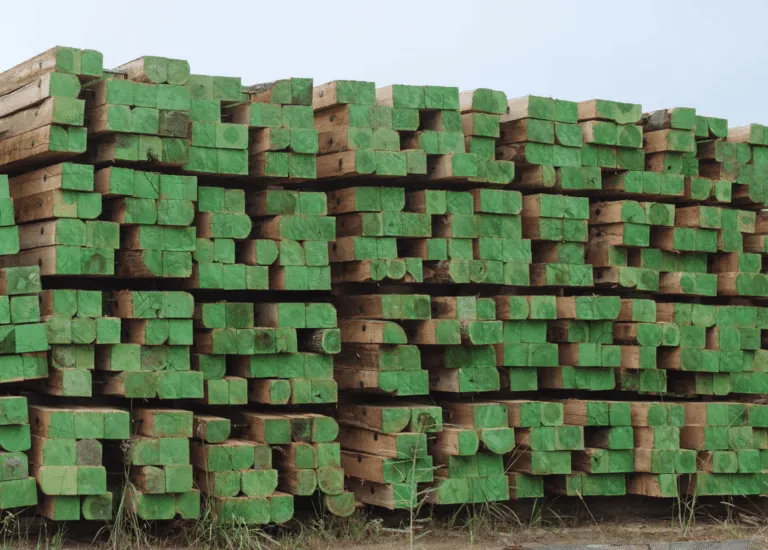
How Timber Mat Defects Affect Performance And Safety
Timber mat defects change how a mat behaves under real loads. For example, a void or bark pocket at a bolt location can let the bolt loosen in service, which compromises the whole mat.
Engineers often think of mats as solid, rectangular units that spread load in a predictable way. However, a mat full of defects behaves more like an uneven, partially hollow structure, which is less stable under heavy equipment.
Independent wood engineering references are clear: full, sound cross-sections provide strength, and missing or unsound wood reduces capacity.
When Can You Live With Defects, And When Can’t You?
Not every use of a mat needs the same level of reliability. For light access in low-risk areas, some timber mat defects may be acceptable.
It’s a combination of three things that determine how well mats will do their job.
- Load from machines.
- Mat strength
- Ground bearing pressure.
Project managers use engineering calculations and rules of thumb to estimate if the three aspects together will work.
When you place large cranes, critical lifts, or high traffic routes on mats, reliability matters.
We can’t always control how an equipment operator will work, nor what the ground conditions are like. We can control the mat.In those cases, it makes sense to source mats that are uniformly manufactured from strong species with minimal defects and consistent cross-sections.
If you want to understand the basics of Eucalyptus timber mats and how engineered mats help reduce uncertainty, see here.
What To Look For When You Inspect Mats
A quick visual inspection can tell you a lot about timber mat defects and likely performance.
Look for:
-
Large areas of bark or wane where there should be wood.
-
Voids or big gaps between timbers, especially near bolts or lifting pockets.
-
Rot, deep splits, or crushed areas in high load zones.
-
Bolts that pass through air or bark instead of solid wood.
If you see a pattern of these issues across a load of mats, you should expect uncertain performance and shorter mat life.
Articles and guides on Eucalyptus timber mats are at the Resources.
What Better Timber Mat Manufacturing Looks Like
Reliable mats come from reliable manufacturing. That means choosing strong species, implementing good quality assurance procedures and using precision manufacturing.
Well-manufactured mats minimize wane and bark, avoid voids, and keep defects away from critical sections. All this reduces uncertainty, improves consistency, and supports safer, more predictable performance in the field.
If you want more background on timber mat production, see a related post.

Next Steps: Reduce Risk From Timber Mat Defects
If timber mat defects concern you, start with a simple change: tighten your incoming inspection criteria. Decide where defects are acceptable and where you need solid, defect-minimized mats.
World Forest Group can help you define what “good” looks like for your specific applications and source mats that align with those standards. When reliability matters, it pays to specify mats with strong working characteristics and controlled defects, not just the lowest upfront price.
If you want to reduce risk from timber mat defects on your next project, contact World Forest Group or request a quote to discuss specifications that fit your work.”

