
Timber Mats Reforestation originally published July 31, 2019 as Buy Timber Mats, Plant Trees, Save the World? Updated January 19, 2026 with current research.
Planting more trees at scale can significantly reduce atmospheric carbon. Timber mats reforestation could be part of that. Recent research continues to highlight very large but finite global restoration potential. Thoughtful use of plantation-grown Eucalyptus timber mats supports this reforestation effort. Our mats allow heavy industry to function while helping maintain or expand forest cover on degraded lands.
One-minute Overview
-
A landmark global analysis found that Earth’s climate today could support about 4.4 billion hectares of tree canopy. This compares with roughly 2.8 billion hectares currently.
-
That leaves roughly 0.9 billion hectares available for new tree cover. These areas lie outside existing forests, farms, and cities. This expansion could store around 200 gigatonnes of carbon at maturity.
-
New 2023–2025 research refines this picture. It shows that hundreds of millions of hectares of degraded land could regenerate naturally or be restored. Most of that land is in the tropics or in South America. However, scientists warn that climate change and land-use pressures could shrink this potential over time.
How Much More Tree Cover?
In the 2019 article, we mentioned: “Trees currently cover 2.8 billion hectares of land — but they have the potential to populate as much as 4.4 billion hectares.” This estimate comes from high-resolution satellite analysis. Researchers directly mapped current and potential canopy cover under today’s climate. The analysis excluded existing forests, croplands, and urban areas.
There is room for roughly 900 million additional hectares of tree cover globally. This represents a greater than 25% increase in forested area if fully realized.
Where Could New Trees Grow?
The potential for new or restored forests is not evenly distributed. Earlier analyses showed that more than half of the restoration opportunity lies within six large countries. These include Russia, the United States, Canada, Australia, Brazil, and China. These nations have extensive land areas where climate and soils can still support trees.
More recent 2024 studies focus on tropical regions. They find about 215 million hectares of degraded or deforested land with strong potential for natural forest regeneration. This exists particularly in Brazil, Indonesia, China, Mexico, and Colombia. Obviously, timber mat reforestation isn’t going to solve the problem alone. But, it’s a step in the right direction.
How Timber Mats Reforestation Works
Most plantation owners have sophisticated models that tell them when to cut trees. They also have sophisticated models to tell them which is the best product.
Timber mats will often use the majority of the log. So, timber mat reforestation is a natural side effect of smart forest management. The remainder of the log can go into chips. Or, occasionally into higher grade lumber. Either way, the environment wins.
What About 2024–2025 Research?
Updated assessments emphasize that tree restoration is powerful but not a silver bullet. A 2023 integrated global assessment estimated that restoring around 900 million hectares of tree cover might store roughly 90–108 gigatonnes of tree carbon. This is substantial but below some early high-end claims. The results are sensitive to how landscapes are managed.
At the same time, monitoring data show that global tree-cover loss remains high. Tens of millions of hectares were lost in 2024 alone. This was driven by fire, land conversion, and logging. Another 2025 analysis notes that offsetting the emissions of the world’s largest fossil-fuel producers with trees alone would require a forest area on the order of the entire North American continent. This underscores the limits of relying only on tree planting.
Shameless Plug: Why Eucalyptus Timber Mats and Why Timber Mats Reforestation?
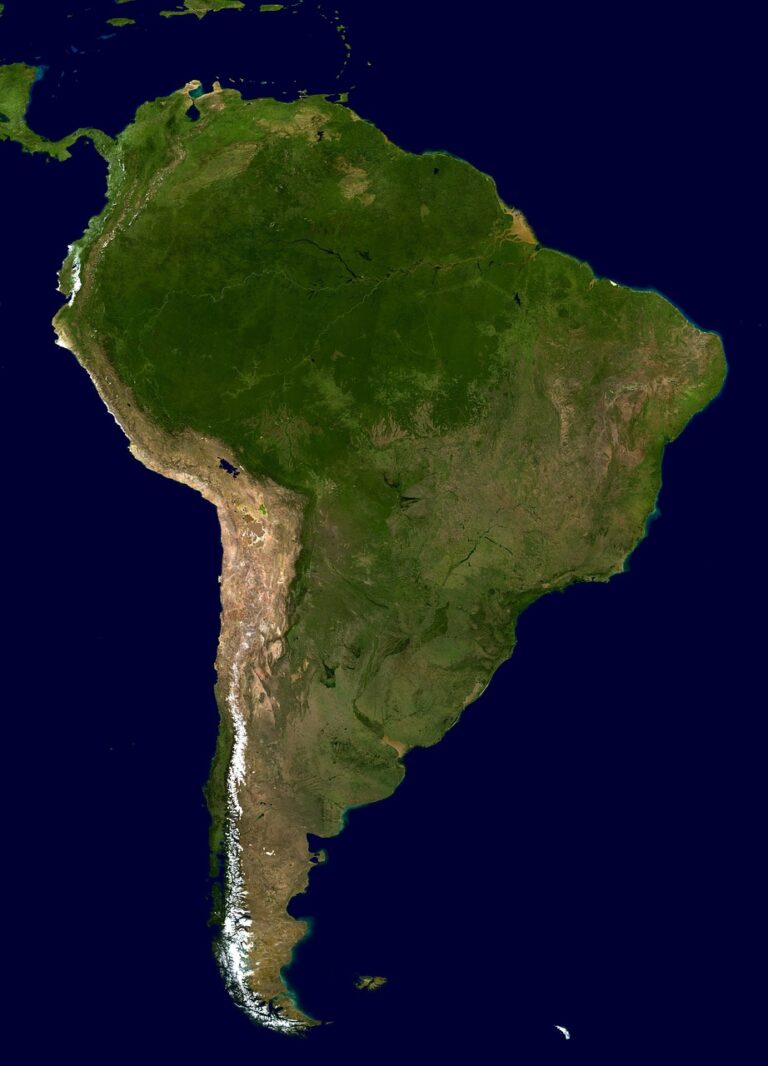
Eucalyptus plantations in Brazil demonstrate how well-designed working forests can combine industrial utility with expanded tree cover. These forests grow on landscapes that were historically cleared or degraded. Fast-growing plantation Eucalyptus can reach harvest size in years rather than decades. This enables a renewable supply of high-strength logs for timber mats. At the same time, it keeps land in continuous forest cover through successive rotations.
Timber mats manufactured from sustainably managed Brazilian Eucalyptus plantations help reduce pressure on slower-growing natural forests. They support large-scale, actively maintained tree cover where little or none existed before. For your projects, that translates into A Better Timber Mat with reliable performance in the field. For the planet, it means more standing trees working every day to store carbon and rebuild resilient forest landscapes. This connection between timber mats and reforestation creates a sustainable cycle that benefits both industry and the environment.