
Why Standardization Matters In Timber Matting
Why Standardization Matters In Timber Matting – was revised on January 7, 2026
Summary
Standardization allows buyers to purchase goods and services with confidence by establishing consistent specifications, reducing variability, and eliminating uncertainty.
The timber mat market lacks standardization compared to other industries, creating higher purchase risk and challenges for contractors and project managers.
Understanding how standardization improves reliability, safety, and total cost helps contractors make better decisions about ground protection materials.
The Foundation Of Standardization
Standardization is the foundation that allows us to purchase goods and services with a high level of comfort.
Standardization allows us to forget about the details every time we use a good or service and get on with our lives. When you buy regular gasoline, you know you are getting 87 octane. Standardization is based on regulation, enforcement, and trust. You trust the gas station will deliver what they say, and you don’t think about it.
This confidence comes from agreed-upon specifications. Standards define what a product must deliver. Testing and quality control verify compliance. Trust builds over time when standards are consistently met.
The value of standardization extends far beyond convenience. Research shows that manufacturing standardization reduces defects by 20% and can lower rework and scrap costs by 30%. These benefits apply across industries from automotive to aerospace to construction.
Why The Timber Mat Market Lacks Standardization
The mat market lacks standardization, partially because there are lots of wood species in the USA and there are many manufacturers with local requirements and limitations.
The common “specification” across different matting products such as timber mats, laminated mats, bolted access mats, composite mats, and steel mats are dimension and absence of rot where applicable. That is a scant specification compared to other construction materials.
This limited standardization creates challenges. Buyers must evaluate wood species, timber quality, manufacturing methods, and design details for every purchase. Planning becomes more complex. Purchase risk increases. The lack of uniform specifications makes it difficult to compare products or predict performance.
Material standards play a crucial role in manufacturing and construction by ensuring consistency, reliability, and safety. Industries that embrace standardization benefit from predictable performance, reduced costs, and improved safety outcomes.
How Standardization Reduces Variability
Standardization achieves its benefits by controlling variability at multiple levels.
Raw Material Standardization
Starting with consistent raw materials is the first step. When manufacturers use the same species, from controlled sources, with defined properties, output becomes more predictable. Variability in wood density, strength, and moisture content decreases.
Process Standardization
Manufacturing processes that follow documented procedures produce uniform results. The same equipment, settings, and quality checkpoints eliminate variation between production runs. Workers following standard operating procedures make fewer errors.
Studies show that process standardization can reduce manufacturing costs by up to 50% through better purchasing leverage, lower inventory expenses, and reduced overhead. Companies that standardize operations also report improved flexibility and faster response to changing requirements.
Testing and Quality Control
Regular testing against defined standards catches defects before products reach customers. Standardized testing methods ensure measurements are accurate and repeatable. Quality control systems that document results create accountability and drive continuous improvement.
Design Standardization
Consistent design specifications eliminate uncertainty about product performance. Buyers know exactly what they are getting. Engineers can design with confidence. Project planners can predict outcomes.
The Benefits Of Standardization In Practice
When standardization principles are applied to timber matting, multiple benefits emerge.
Higher Reliability
Products manufactured to consistent standards perform predictably. Fewer surprises occur in the field. Equipment operators can trust that mats will perform as specified under rated loads.
Lower Purchase Risk
Clear specifications reduce buyer uncertainty. When every mat meets documented standards, purchasing decisions become simpler. The risk of receiving substandard products decreases.
Easier Planning
Standardized products simplify project planning. Load calculations become straightforward. Mobilization is faster when mat specifications are known in advance. Logistics improve when dimensions and weights are consistent.
Better Safety Outcomes
Uniform products reduce job site hazards. When mats have consistent dimensions, tripping hazards decrease. When materials meet strength standards, failure risk drops. Standardized quality control catches defects that could cause accidents.
Lower Total Cost Of Ownership
Standardization reduces costs throughout the product lifecycle. Better materials last longer. Fewer defects mean less downtime. Consistent quality eliminates costly surprises. These savings compound over time.
For more on how material choices affect project economics, see articles on total cost of ownership in timber matting.
Standardization Field Applications
Consistency and quality result from standardization. Benefits appear across different applications.
Safety Applications
Safety improves when materials meet documented standards. Design features such as reduced or eliminated notches reduce tripping risk. Constructing mats from a single, uniform species with known properties reduces variability in strength and performance.
Square edges and clear wood, rather than wane, bark, or rot, create mats with higher design and wear integrity. Consistent dimensions eliminate surprises. Rigorous quality control catches defects before mats reach the field.
Fleet Optimization
Standardization allows contractors to right-size their fleets. When mat properties are known and consistent, engineers can specify exactly what is needed. No more over-specifying to compensate for uncertainty. This optimization captures significant savings.
Extended Service Life
High-quality raw materials manufactured in a consistent environment result in longer lasting products. Increased service life yields additional savings over the life of the equipment. Predictable performance allows better maintenance planning.
Understanding defects and their impact on mat performance helps contractors evaluate quality.
What Standardization Looks Like In Timber Mats
When standardization principles are applied to timber mat manufacturing, several elements must align.
Material Control
Using the same raw materials from controlled sources. Specifying timber from plantation-grown, single-species forests with predictable properties. Testing materials to verify they meet minimum standards before manufacturing begins.
Manufacturing Control
Following documented manufacturing processes. Using the same equipment, facility, and procedures for every mat. Working with qualified suppliers for components like bolts, plates, and end seals. Maintaining equipment to ensure consistent output.
Quality Control
Inspecting materials multiple times during production. Testing finished products to verify they meet specifications. Documenting results to create accountability. Rejecting products that do not meet standards.
Performance Guarantees
Backing up standardization with written guarantees. Documenting what the product will deliver. Standing behind products when they meet specifications. Creating trust through consistent performance over time.
Learn more about the fundamentals of timber mat specifications and performance.
Additional resources on standardization principles in timber matting.
How World Forest Group Applies Standardization
World Forest Group applies these standardization principles to Eucalyptus timber mat manufacturing.
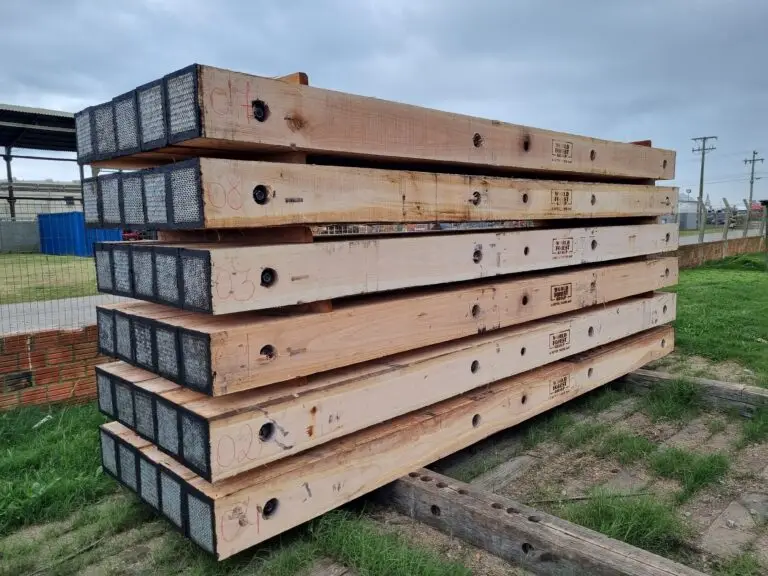
Each mat uses the same raw materials from controlled fiber sources. The same manufacturing process in the same facility. The same component suppliers we have worked with for years. Uniform materials, manufactured in the same manner, subject to consistent quality control and testing, make a standardized product.
This approach allows World Forest Group to provide a 10-point product manufacturing guarantee. It allows contractors to forget about the details and focus on their projects.
The benefits include higher reliability, lower purchase risk, easier planning, and lower total cost of ownership. Eucalyptus mats are able to be standardized because we start with standardized and better materials.
For more resources on timber mat selection and performance, visit our Resources
Next Steps
Ready to experience the benefits of standardized timber mats on your next project? World Forest Group delivers Eucalyptus timber mats with consistent quality, rigorous testing, and a 10-point manufacturing guarantee. Request a quote today or contact us to learn how standardization can lower your total cost of ownership.

